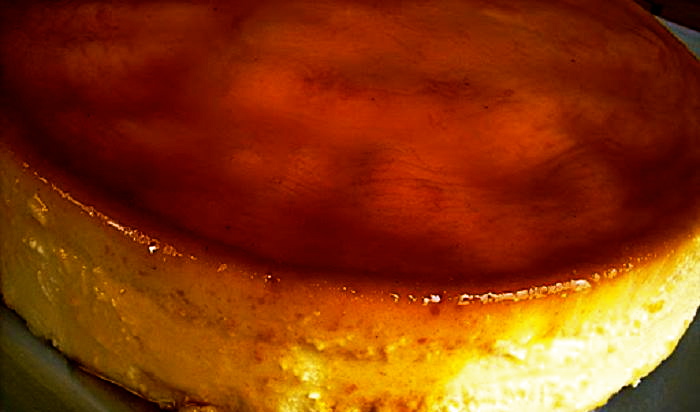
Flan de Queso Cotija con Salsa de Piloncillo y Mezcal #Receta

“Para todo mal, mezcal, y para todo bien también”, dice el dicho oaxaqueño. Suponemos que esto también incluye el mal de amor…
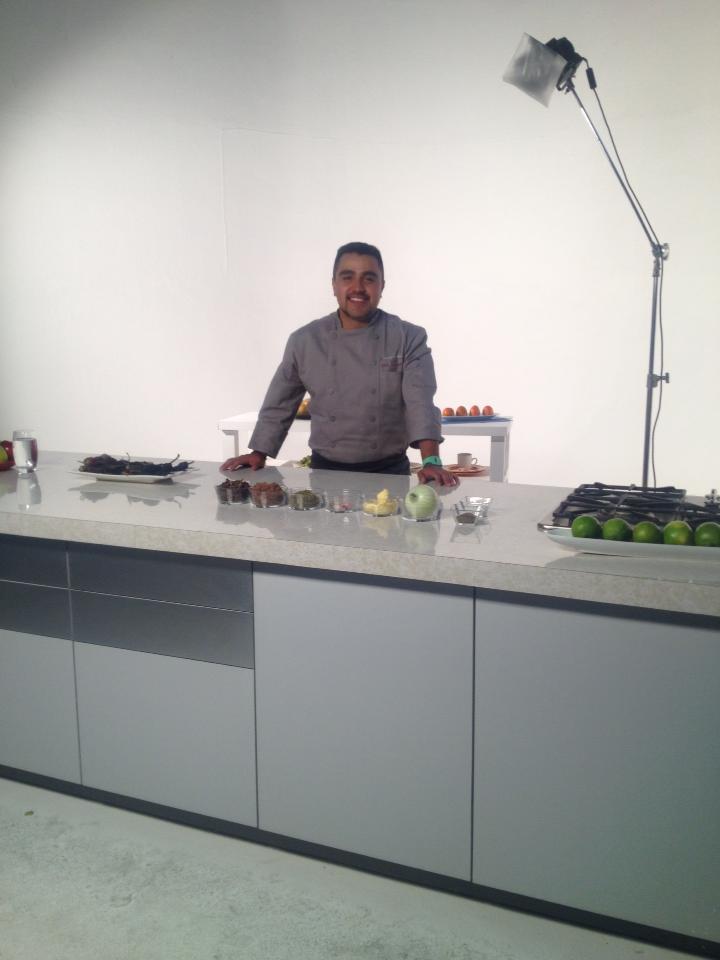
Del náhuatl “mezcalli” que significa “agave horneado”, esta bebida artesanal mucho menos famosa que el tequila, poco a poco ha ido conquistando paladares tanto mexicanos, como extranjeros. Esta semana, el chef Moisés Salazar, nos trae una receta para hacer un delicioso flan con mezcal que conquista.
Utensilios
- Molde para flan con tapa de presión
- Olla express o de presión
- Base para baño maria
- Licuadora
- Horno
Ingredientes
- 1 lata de lechera (400 grs)
- 1 lata de leche clavel o evaporada (350 ml)
- Vainilla
- 6 huevos (310 grs)
- 200 gramos de queso cotija
- 250 grs piloncillo
- 100 ml de agua
- 200 ml de mezcal de tu elección
Procedimiento
1. En una sartén, calienta el piloncillo y el mezcal con un poco de agua hasta que se derritan formando un caramelo.
2. Licúa los ingredientes, deja reposar la mezcla en el refrigerador para que salgan todas las burbujas de aire.
3. En el molde para flan, vacía la mitad del caramelo y la mezcla de todos los ingredientes.
4. Colóca la mezcla en la olla
express sobre la base para baño maría y agrega agua sin que toque el molde.
5. Cuando la olla express empiece a soltar vapor, cuenta 15 minutos y sácala de la misma. Espera a que enfríe. Después, métela en el refrigerador.
6. Al servir agrega el resto de la salsa caramelo encima del flan.

El chef Moisés Salazar es un mexicano experto en Alta Cocina, dedicado al catering corporativo y privado. Su pasión lo ha llevado desde Belize, donde estuvo a cargo de delegaciones diplomáticas de la Embajada de México, Estados Unidos y varios países centroamericanos, hasta Atlanta, donde colaboró en el famoso St. Regis. Encuentra más información sobre el chef Moisés Salazar y su contribución al mundo de la gastronomía en su sitio web: www.chefmoises.com
Publicado originalmente el 2 de septiembre del 2013
Nuestra Mesa: Celebra el Día del Niño con esta Receta para Hacer Tamales Colados de Maíz

Foto: Manuel Rivera para La Vitamina T
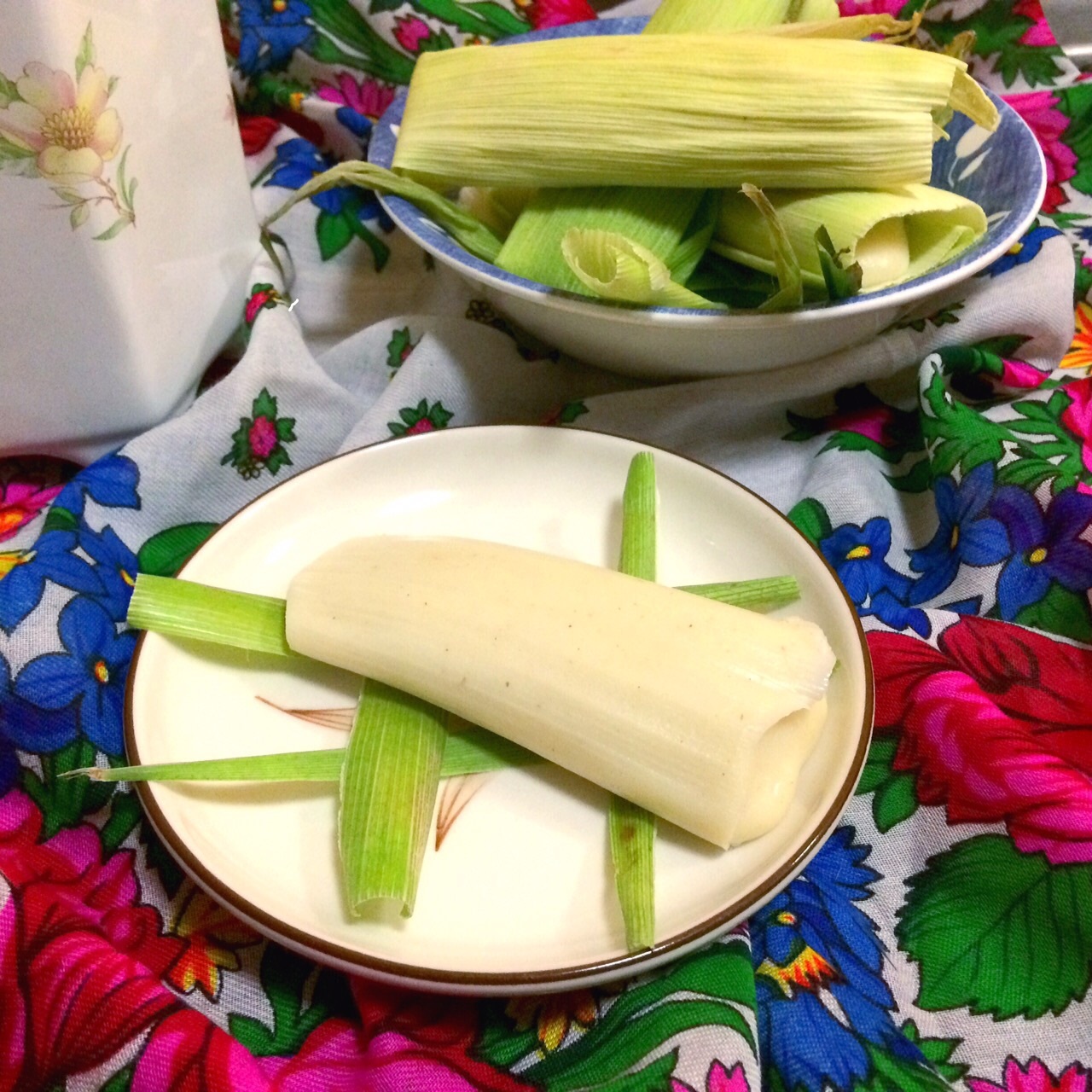
Muy a tiempo para celebrar el Día del Niño, y gracias a la extraordinaria labor de antropología culinaria de nuestro querido amigo y colaborador, el chef Aldo Saavedra, nos es posible compartir con ustedes esta receta originaria del municipio de Ejutla, en el estado de Jalisco. Estos tamales son refrigerados, no puestos al vapor, como más comunmente se preparan. El chef Saavedra documentó esta joya de la comida conventual durante una visita a un convento de monjas adoratrices, ubicado en este antiguo pueblo Jaliscience.
Rinde 2 docenas
INGREDIENTES
- 24 pz hojas de elote fresco
- 10 elotes tiernos desgranados
- 5 lt de leche
- 5 tz azúcar refinada
- 5 rajas de canela (5cm aprox)
- 2 cdas bicarbonato
- 5 cdas fécula de maíz (maizena)
PROCESO
- Cubre las hojas de elote con un trapo húmedo para mantenerlas frescas.
- Muele los granos de elote con un litro de leche ( muy bien molidos) y cuélalos.
- Coloca 3 y 3/4 de leche con azúcar, bicarbonato y canela en una olla a fuego medio.
- Mueve constantemente para que se incorporen los ingredientes y se disuelvan. Pasados los 10 minutos, retira la canela.
- En la taza de leche restante, disuelve la fécula de maíz, agrégala a la leche que esta en la olla y revuélvela.
- Agrega la mezcla molida de los elotes licuados y colados. Continúa removiendo la mezcla hasta que se espese y se pueda ver el fondo de la olla.
- Retira del fuego. Con una cuchara, pon la mezcla en las hojas de maíz de manera individual, doblando las hojas de la parte de abajo y acomodar en un recipiente con cuidado.
- Ya que todos los tamales estén acomodados, mételos al refrigerador por aproximadamente 3 horas o hasta que estén bien fríos.
- Una vez que los tamales estén fríos, sírvelos como postre o para la cena.
¡Feliz Día del Niño!
 El chef Aldo Saavedra ha cocinado para huéspedes de establecimientos como el conocido Hotel Condesa D.F. y ha contribuído con sus recetas en proyectos con marcas de la talla de Larousse y Danone. En Nuestra Mesa, el chef Saavedra comparte con los lectores de La Vitamina T, su pasión por la cocina y por México. Encuentra más información sobre el chef Saavedra en México de mis Sabores.
Nieve de Sabores (The Many Flavors of ‘Snow’ )

A few of the many flavors of nieve. Photo Credit: Manuel Rivera. Mercado 20 de Noviembre, Oaxaca México In Mexico, and especially in Oaxaca, the art of making nieve (Spanish for ‘snow’) is a tradition passed on from generation to generation. For centuries, nieve artisans or neveros have crafted this dessert by hand, using only fruit and no artificial coloring or flavoring. If you are in Oaxaca, you will easily be able to indulge in this festive edible art, which will lure you from wooden containers on streets and markets. A wide array of both usual and unexpected flavors is typically available wherever nieve is sold- chocolate, strawberry, corn, cheese, mezcal, rose, avocado and soursop, to name a few. There are also deliciously surprising combinations such as the popular beso de ángel, or ¨angel´s kiss¨, which typically combines cherries with almonds and other fruits, delivering a complex yet delicate texture and flavor. Although still widely available, today, artisan nieves face the overwhelming competiton of mass-produced ice cream.
A Sip of Heaven: Chocolate Champurrado

Chocolate champurrado. Photo: Brenda Storch “Es tan santo el chocolate, que de rodillas se muele, juntas las manos se bate y viendo al cielo se bebe.”
-Refrán popular mexicano
“Chocolate is so holy that you must kneel down to grind it; put your hands together to churn it, and look to the Heavens to drink it “.
-Mexican folk saying
Chocolate, or Xocoóatl, in Náhuatl, was an important ceremonial drink in pre-Columbian cultures. Its importance was such, that seeds of the cacao tree were not only offered to gods, they were also used as currency. Considered nutritious and even medicinal, chocolate made its way to Europe via Mexico.
Serves 4 cups
Ingredients
- 4 cups of water
- 1/2 sprig of cinnamon
- 5 tbsp of brown sugar or a small piece of piloncillo of around 2.5 oz
- 5 tbsp of tortilla masa
- 1.5 oz of handmade chocolate. I got the chocolate for my champurrado as a gift during my last trip to Mexico! You may replace it with a piece of chocolate for atole (in the U.S., you may find it in your ethnic food aisle under brands such as Abuelita or Ybarra). Using the latter might make the champurrado a bit sweeter, so reduce sugar.
- 1/4 tsp vanilla extract
Directions
- Dilute the masa in 2 cups of cold water until there are no clumps.
- Boil the remaining water with the sugar and cinnamon.
- Incorporate the corn masa while mixing constantly on low heat.
- Add the vanilla and the chocolate.
- Continue to mix constantly for about 15 minutes or until the mix reaches the desired thickness.
- This time, I added a pod of cascabel pepper for flavor! You can add a piece of dry pepper without its seeds if you want. We chose a sweeter pepper.
- Champurrado is a very thick drink. If you like it a bit lighter, you might reduce the amount of masa you add.
Enjoy!
World Class: Mexican Wine and the Hands who Make It (Introduction to a Series)

Photo: Enrico Bellomo Mexico has been producing wine since the 16th century. Legend tells of Hernán Cortés demanding that grapevines be brought to the Nueva España to be grown after the Spanish wine supply was depleted during the celebration of the defeat of the Mexica empire. In an interesting turn of events, Mexican wine happened to be so good, that the Spanish Crown banned its production other than for liturgical use.
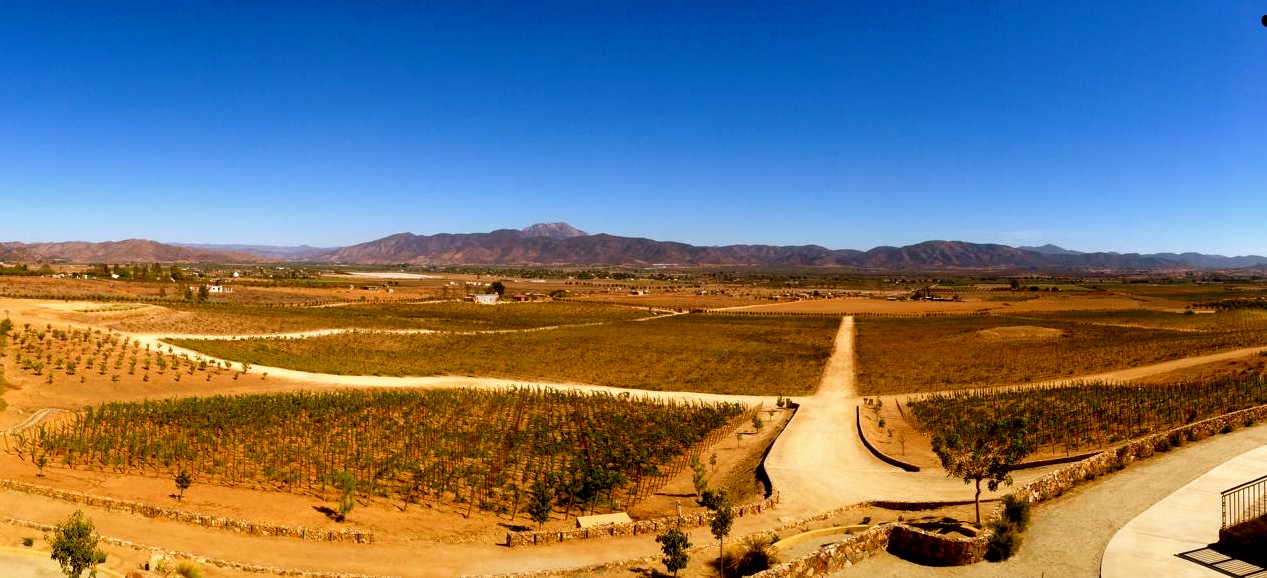
In 1843 Dominican priests from the Nuestra Señora de Guadalupe del Norte mission, discovered that superior quality grapes faired well in the valley’s mediterranean microclimate. Today, 90% of all Mexican wine is produced in this area. Sadly, not many Mexicans drink it.
We are back from a visit to what is known today as Valle de Guadalupe, México’s wine country. We were drawn by Lozhka Bistrot, the most recent project by beloved Mexican gastronome Chef José Bossuet, and Pasión Biba’s Abel Bibayoff. Our gracious hosts delighted us with a tour featuring a variety of wineries where the production ranges from artisanal to massive.
The time we spent with the winemakers left a lasting impression- a shapshot of the Mexico only a few have a chance to palate. From mathematicians, to astronomers, enologists, plastic artists and restaurateurs, the people behind the wine that is produced in Valle de Guadalupe explains why this wine is so extraordinary. Here, passion runs deep, as does a profound, almost spiritual commitment to making the best wine. Every time.
In the upcoming weeks we will be writing a series based on our experience at each winery: Pasión Biba/Bibayoff, Alximia, Torres Alegre and Las Nubes. This is our humble tribute to remarkable wine and to the hands who make it.
Next articles in the series:
> ¡´Biba´México! The Zeal Behind Mexico´s Pasión Biba
>AlXimia: The Art and Science of Extraordinary Wine
Calabaza en Tacha: Dulce Tradición

Foto: Manuel Rivera Si ustedes como nosotros alguna vez se han preguntado cómo es que la calabaza en tacha ha merecido tan peculiar nombre, el chef Aldo Saavedra nos saca de la duda al contarnos que en los ingenios azucareros de principios de la colonia, la calabaza era introducida en un cesto cónico o cilíndrico fabricado con hojas de palma conocido como “tompeate” ( del náhuatl “tompiatli” ), mismo que posteriormente era confitado en dos calderas de un horno muy grande en el que se hacía el azúcar, y en las que se juntaba un jugo muy concentrado al que hoy conocemos como piloncillo. Una de las calderas se conocía como la “melera” y la otra como la “tacha”. De aquí el nombre de este tradicional postre.
Y aunque las fiestas típicas del otoño en estas latitudes ya culminaron, y la calabaza en todas sus formas (desde el café de moda hasta el pie) abruptamente cede lugar a los sabores propios de invierno, la calabaza en tacha es un postre delicioso que puede disfrutarse siempre y cuando la calabaza fresca esté disponible.
INGREDIENTES
- 2 lbs (1 kg) de calabaza de Castilla
- 2 lbs (1 kg) de piloncillo
- 8 tazas de agua
- 1 raja de canela de 3 in. (10 cm)
- 1 naranja ( ralladura )
- 6 pimientas gordas enteras
- 4 anís estrella
- 3 rebanadas de jengibre
PROCESO
- Lava la calabaza y las naranjas.
- Parte la calabaza en trozos pequeños
- Pon el agua, el piloncillo, la canela, la naranja, la pimienta, el anís y el jengibre en una cacerola. Cocina a fuego lento hasta que se deshaga el piloncillo.
- Agrega la calabaza y cocina durante 5 horas a fuego medio. Mueve periódicamente.
- Confirma la sazón y asegúrate de que la calabaza esté cocida.
- Retira del fuego y deja enfriar.
- Acompaña con un vaso de leche o sírvela en un plato con leche.

El chef Aldo Saavedra ha cocinado para huéspedes de establecimientos como el conocido Hotel Condesa D.F. y ha contribuído con sus recetas en proyectos con marcas de la talla de Larousse y Danone. En Nuestra Mesa, el chef Saavedra comparte con los lectores de La Vitamina T, su pasión por la cocina y por México.
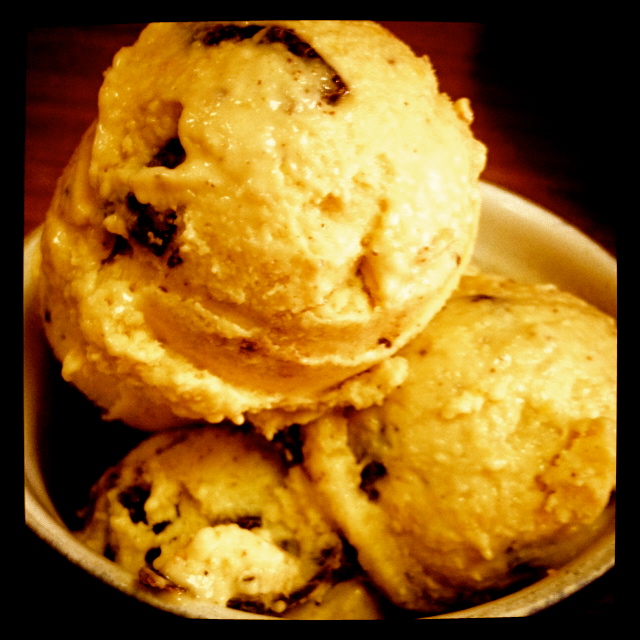
Recipe: Beat the Heat with Mezcal and Sesame Seed Ice Cream – Nuestra Mesa

Photo: Manuel Rivera To beat this summer heat with a unique Mexican version of ice cream, our friend and contributor chef Aldo Saavedra, shared with us a recipe to make a delicious mezcal and sesame seed treat.
Just like tequila, mezcal is made from agave. This smokey-flavored artisanal drink is slowly becoming popular as another Mexican contribution to gastronomy worldwide.
Ingredients:
Ice Cream Base
This is the foundation for any ice cream, and it can be used to create any other flavor. The sky is the limit! It is all up to your imagination.
- 2/3 cup of sugar
- 10 egg yolks
- 1 1/2 cups of heavy cream
- 1 1/2 cups of whole milk
Mezcal and Sesame Seed
- 7 tbsp of your favorite mezcal
- 2 cups of toasted sesame seeds
- 2 cups of semisweet chocolate (in chunks)
Process:
- Boil the milk along with the cream and mezcal in a pot.
- In a separate container, whip the egg yolks with the sugar until fluffy.
- Once your milk mixture has reached the boiling point, add half of the volume to the whipped egg yolks, and continue to whip until the yolks and the mix are incorporated.
- Add the whipped egg yolks to the pot on the stove and stir with a wooden spoon on low heat until the mix thickens.

5. You will know it is time to remove your mix from the stove, once you are able to draw a finger on the wooden spoon without it dripping. Remove and let the mix cool over ice.
6. Once cold, put the mix in a blender with the sesame seed and blend. Strain.
7. Transfer the strained mixture into a container and place in the freezer. Stir about every 10 minutes until it reaches the desired consistency.
8. Add the chocolate and mix.You can store your ice cream in plastic containers in the freezer. Enjoy!
 Mexican Chef Aldo Saavedra regularly shares with La Vitamina T’s readers his passion for his country and for Mexican cuisine as a cultural expression. Chef Saavedra has been part of the team in charge of delighting guests at a variety of reputable establishments, including Hotel Condesa D.F. He has also partnered in projects with global brands such as Larousse and Danone.
Pastel de Nata con Mousse de Chocolate

Foto: Victoria del Ángel La deliciosa nata, típica de la gastronomía mexicana, es esencialmente la crema que se retira de la leche para después enfriarse. Hace años que no me como un pan con nata, y cuando vi este pastel, pensé que el compartirlo era algo imperativo. Esta receta es cortesía de la chef Victoria del Ángel.PASTEL DE NATA CON MOUSSE DE CHOCOLATE Y RELLENO DE JALEA DE MANDARINAPan:- 215 gr de nata
- 400 gr de azúcar
- 200 gr huevo
- 240 ml leche
- 15 ml extracto de vainilla
- 280 gr harina
- 15 gr polvo para hornear (esta receta es para una altitud como la de México, ajusta este ingrediente como sea necesario)
- 1 pizca de sal
Procedimiento:- Acrema la nata con el azúcar e incorpora los huevos poco a poco.
- Agrega la leche y el extracto de vainilla, añade la la harina y el polvo para hornear cernidos.
- Vacía la mezcla en un molde y hornear a 180°C
Mousse de chocolate de leche:- 200 gr cobertura de leche
- 250 ml crema para batir
- 9 gr grenetina
- 400 ml de crema semi batida
Procedimiento:- Calienta la crema y agrega la grenetina ya hidratada.
- Vacía sobre el chocolate de leche para fundirlo.
- Deja enfriar sin que se cuaje y mezcla con la crema semi batida.
Jalea de mandarina:- 500 ml jugo de mandarina
- 15gr de grenetina
Procedimiento:- Calienta el jugo de mandarina y agrega la grenetina ya hidratada.
- Vacía en un molde del tamaño del que se usó para el pan de nata.
- Rebana el pan por la mitad y agrega un poco de mousse de chocolate de leche, coloca la jalea de mandarina y vuelve a agregar mousse, coloca la otra capa de pan y cubre el pastel con el resto del mousse.
- Refrigera y sirve.

La chef Victoria del Ángel descubrió su pasión por la cocina desde los tres años. Fascinada por la repostería y gastronomía mexicanas, decidió perseguir la licenciatura en gastronomía en la Escuela Superior de Gastronomía, y más tarde un postgrado en repostería en la Universidad de Artes culinarias y Tendencias Europeas, otorgado por el Culinary Institute Switzerland de Suiza. Victoria es dueña de la chocolatería Xocolat del Ángel en Jilotepec, México.
A Cup of Magic with a Hint of Baroque

Churros and chocolate at Churrería El Moro – Mexico, City, Mexico
Photo: Brenda StorchRUTA MEXICANA

It was not by coincidence or like we say in Mexico, “de puro churro” * that Churrería El Moro was on my agenda as a place I had to check out this time. I usually visit my family in Mexico City during the holiday season, which makes it almost impossible to make a stop at all the places I either want to go back to, or experience for the first time. This time around, I made sure to move this famous establishment to the top of my list.
I visited El Moro, like locals call it, on New Year’s Day, and I was particularly impressed to find quite a large group of people lined up outside. A look at the menu makes it clear- El Moro masters the alchemy of churros con chocolate, and its simple menu has delighted guests for nearly a century. Here you can find four types of chocolate differentiated primarily by thickness and degree of sweetness. These deliciously baroque concoctions have been simmering to perfection since this legendary café opened in 1935.

Churrería El Moro – Mexico City, Mexico
Photo by: Brenda StorchThe line moved quickly, and after a short wait, we were warmly greeted and escorted to a table by someone so cheerful to see me on a holiday, I almost felt like family. I was delighted to have a front row seat to a performance, as churros were being charmed into delicate wheels of fried dough destined to vanish in a matter of seconds.
The city’s hustle and bustle are part of the décor and the overall experience of this urban, simple and non-pretentious locale: El Moro welcomes locals and tourists from all walks of life.
Growing up in a place like Mexico City, where you can find a cathedral built on top of an Aztec building ( originally built on a lake that is no longer there), I anticipate magic whenever I visit. I have never been disappointed, and this time around, I drank magic in a cup.
*Literally translated as “by virtue of a churro” which means, “accidentally.”

El Moro, Mexico City- Mexico
Photo by: Brenda StorchIf you visit:Don’t be deterred by long lines if you encounter them, they move quickly. The area is busy, but generally safe. Exercise precautions you would observe in any major city. Consider getting your churros to go, as this is also an option.¡Chicharrón con Ch de Chicago!

Find this chicharrón with hot sauce, and other Mexican treats including nieves, guanabana popsicles, and even the regional jicaletas (a snack made with jicama and chile) at La Dulce Vida Nevería in Melrose Park. Flour chicharrones (an alternative to the pork version) as well as fruit with lime, salt and different chiles, are a staple of any Mexican childhood. Typically sold from street carts, likely with no health clearance, I am convinced this is how kids in Mexico build their immune system.
For those who, like me, are far away from home, La Dulce Vida offers a perfect antidote to homesickness with its large and carefully curated collection of Mexican goodies (from chocolate Abuelita to nieves and even esquites and tamales). For those who, like my husband, have developed a taste for guanabana popsicles, this place is a perfect spot to get your Mexico fix with your evening snack.
I am so excited to have found this place. Who knew that Chicago was so close to Mexico?
La Dulce Vida is open Monday to Sunday from 6:00 am to 10:00 pm 2015 W. Rice St. Melrose Park, IL 60160