Estampas de Mi Ciudad – Tejate, the Drink of Kings

Tejatera. Tlacolula, Mexico. Photo credit: Chef Aldo Saavedra With the precision of a natural event, spring after spring, dozens of tejateras (ladies who make tejate) descend upon the village of San Andrés Huayapán, a town about 15 miles away from the city of Oaxaca. The big colorful clay pots signal the beginning of La Feria del Tejate (Tejate Festival), one of Oaxaca’s many tributes to this ancestral drink.
Tejate is made with corn masa, cocoa beans, mamey fruit and the flower of the cocoa plant, also called “rosita de cacao” (little rose of cocoa). Expert tejate drinkers usually agree that the thicker the foam made by this flower, the better the tejate.
This cold drink is served in small handcrafted containers or jícaras. Each drink is as unique as the jícara that holds it, and as proud as the hands that make it. At first glance, tejate might seem a bit rough and perhaps even unappealing. One sip, and you will understand why this complex mix of flavors was the favorite of Zapotec kings.
Not in Oaxaca in April? Don´t worry. You can easily find this drink year round in any Oaxacan mercado, or around the city.
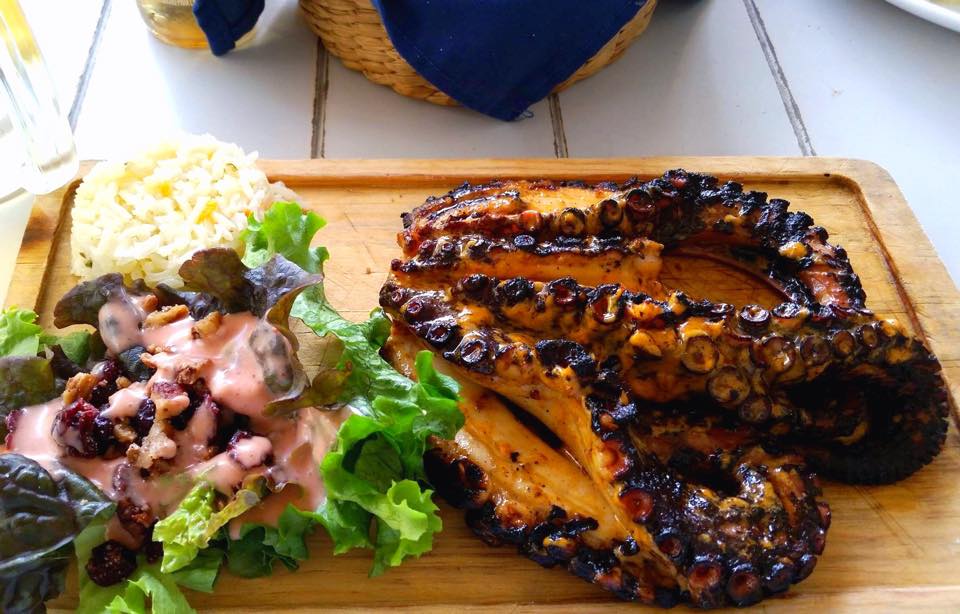
Nuestra Mesa: Pulpos Enamorados – La Receta

Foto: Manuel Rivera Este Día de San Valentín, impresiona a tu media naranja con esta deliciosa y romántica receta del chef Aldo Saavedra: pulpos enamorados.
Ingredientes
- 1 pieza de zanahoria
- ½ cebolla
- 1 rama de apio
- Chile de árbol al gusto
- 5 hojas de laurel
- 1 pulpo
- Sal marina
- Pimienta negra
- 200 gr de mayonesa
- 1 lata chica de chile chipotle
- 1/4 lechuga romana
- Aguacate al gusto
- Suficiente agua para hervir
Procedimiento
- En una cacerola, pon a hervir el agua con la zanahoria, la cebolla, el apio, el laurel y el chile de árbol.
- Mete y saca rápidamente los tentáculos del pulpo en el agua hasta que se enrosquen, después mete todo el pulpo a cocer (alrededor de 30 minutos por cada kilo).
- Deja enfriar al pulpo en el agua para que esto lo haga mas suave.
- En un recipiente hondo aparte, mezcla la mayonesa con el chipotle y la lechuga lechuga. Sazona con sal y pimienta al gusto.
Opción 1:
Una vez que se haya enfriado, el pulpo puede cortarse en trozos pequeño y revolverse con el aderezo que hicimos previamente. Sirve acompañado de tostadas.
Opción 2:
Pasa el pulpo por las brasas y sirve el aderezo a un lado. El toque ahumado le otorga al pulpo un sabor diferente.
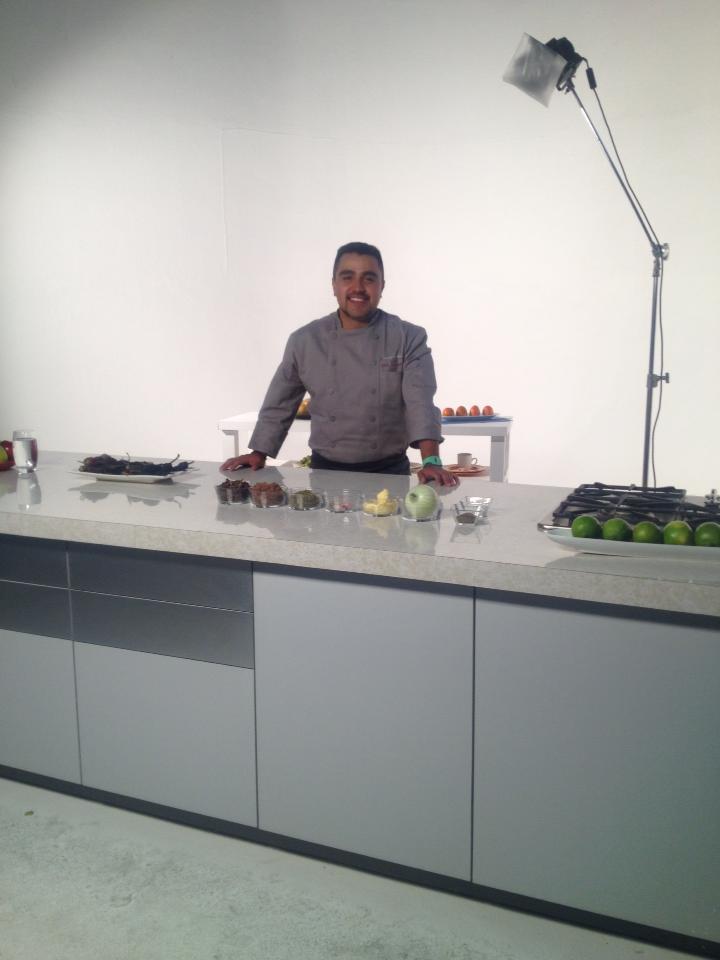
 El Chef Aldo Saavedra ha cocinado para huéspedes de establecimientos como el conocido Hotel Condesa D.F. y ha contribuído con sus recetas en proyectos con marcas de la talla de Larousse y Danone. En Nuestra Mesa, y en su página México de mis Sabores, el Chef Aldo comparte con los lectores de La Vitamina T, su pasión por la cocina y por México.
Food: How it Makes Words Delicious. From the Series #DíloconSabor (Say it with Flavor)

“A darle que es mole de olla” (Let’s get to work because we are making mole de olla). This expression is used to instill motivation to begin working on a complex task.
Post 1 of the series #DíloconSabor (Say it with Flavor)
Having been raised in Mexico City, Mexico, it was not until I moved to the US as a young professional, that I realized that sports jargon was prevalent in colloquial language. I might have not fully understood which sport the expressions had been borrowed from, but I very quickly became adept at seasoning my language with phrases such as “touch base”, “call an audible”, “drop the ball”, etc. Something that was very curious to me is that in contrast, Mexicans season their language with food. This series, “Dílo con Sabor” is a collection of food-centric sayings or allegories that are now part of popular wisdom or folklore.
Do you have a favorite food-related saying? Tweet it to @lavitaminat with the hashtag #díloconsabor (sayitwithflavor).
Rollo de Pechuga de Pollo – Receta Navideña del Chef José Bossuet

Photo: Café Contento ¿Te tocó hacer la cena este año? Sorprende a tus invitados con esta receta del Chef Bossuet para preparar un rollo de pechuga de pollo orgánico relleno de queso de cabra, mantequilla de flor de calabaza con cremoso de camote, quelite Obregón y jitomate cherry orgánicos.
Rinde: 8 porciones
Ingredientes:
- 8 pechugas de pollo orgánico rellenas de queso de cabra
- 4 tazas cremoso de camote, quelite Obregón y jitomate cherry orgánicos
- 2 tazas mantequilla de flor de calabaza
- ½ taza zanahoria rallada en listones y colocada en recipiente con hielos.
Para el rollo de pechuga
- 8 medias pechugas abiertas
- 2 pzas queso de cabra a las finas hierbas
- Sal y pimienta blanca al gusto
- Papel aluminio suficiente
Forma de hacerse:
- Sazona las pechugas con sal y pimienta por ambos lados
- Rellénalas con ¼ de queso de cabra cada una.
- Colócalas en el papel aluminio y enróllalas
- Cocina a la plancha o en una sartén hasta que estén bien cocidas, voltéalas varias veces para asegurar una cocción pareja.
- Reserva
Para la mantequilla de flor de calabaza
- 1 taza mantequilla clarificada
- 1 taza de vino blanco
- 1 taza de flor de calabaza limpia
- 1 cucharada de curry Madras
- Sal al gusto
Forma de hacerse:
Coloca todos los ingredientes y cocina por 30 minutos a fuego bajo, muele finamente.
Reserva
Para el cremoso de camote, quelite Obregón y jitomate cherry orgánicos:
- 1 lto crema para batir
- 2 tazas camote horneado molido
- 1 taza jitomate cherry orgánico
- 3 tazas quelite Obregón orgánico
- Sal al gusto
Forma de hacerse:
- Hierve la crema. Agrega el quelite y los jitomates. Una vez cocidos, agrega el camote y sazona.
- Reserva.
Preparación y Montaje:
- Corta los rollos en dos y colócalos encima del cremoso, baña con la mantequilla de flor de calabaza y decora con la zanahoria.
- Sirve caliente

Chef José Bossuet El chef José Bossuet Martinez, es miembro de la prestigiosa asociación gastronómica “Club de Chefs de Chefs”, mismo que admite exclusivamente a los chefs de cocina que sirven a reyes, reinas, príncipes, jefes de estado y de gobierno.
Bossuet fungió como Chef Ejecutivo de la Presidencia de la República al mando de la cocina del ex-presidente Vicente Fox, en donde tuvo a su cargo la comitiva del avión presidencial, viajando con el presidente en la giras internacionales.
Hoy, ya no es necesario ser funcionario o aristocracia para comer como si lo fueramos. ¿Estás en San Miguel de Allende, Guanajuato? Pues estás de suerte. Visita al Chef Bossuet en su Café Contento y también en Valle de Guadalupe, Baja Californa en Lozhka Bistrot .
Art and Heart: A Culinary Showcase by Ron Aleman at Sophie’s

Sophie’s Ron Aleman. Art.
This is the first thought that came to mind when my dish was served – a beautiful combination of colors and textures that made me take notice. The impeccable service and a thoughtfully curated space overlooking Michigan Avenue added to the experience. Comfort meets class here, and you can´t help but feel charmed when you visit. I was hooked.

Chef Aleman’s cioppino at Sophie’s. And beyond beauty, substance. Heart. You are after all at Saks Fifth Avenue… a model walking by each table with the latest designer jacket can be a reminder of your targeted budget or caloric intake. Chef Ron Aleman’s food is so good though, that somehow you feel welcome, not intimidated.
As I kept coming back I realized that something resonated within me. Just like shorthand, food is a secret language that transports you to a particular time and place. I knew the author of my meal was undoubtedly an artist. But, why did I think that this American fare spoke Spanish to my soul?
Chef Ron Aleman grew up dreaming of pursuing a career in the arts, perhaps painting or drawing (when I heard this, the artistic plating made perfect sense). Instead, he took a detour and graduated with a degree in business. As a successful salesman, at the age of 30, (when many professionals have consecrated themselves to their craft) Aleman was starting over. In his new position, tending to the chores assigned to the most junior staff, he took over washing dishes and mopping with pride. “I knew this was the path I needed to follow, and there was nothing to be ashamed of”, he said.
If you have tried Chef Aleman’s food, you have looked at a snapshot of his heart: “Family is at the center of food. Food is love… cooking for others is an honor.” It is precisely his family where Chef draws a lot of his inspiration. Aleman found his Mexican mother-in-law’s asada salsa so irresistible, that he recreated her recipe in his kitchen. Growing up with tortillas as a staple of his family’s meals, his point of view is down-to-earth yet uniquely cosmopolitan. If you visit, try his coconut bread pudding, a dessert that in Mexico, we call capirotada.

You say bread pudding, I say capirotada. Either way, this dessert is amazing. Like CliffsNotes on Chicago, Chef Ron Aleman’s dishes are a synopsis of the character of the city- elevated yet approachable; informally sophisticated; worldy American with just the perfect touch of heat.
Follow Chef Aleman on Instagram: @Ronaleman27
(312) 525-3400
700 North Michigan Ave. 7th Floor
Esquites con Sal de San Felipe: La Receta de la Chef Atzimba Pérez

Foto: Chef Atzimba Pérez INGREDIENTES
6 elotes tiernos desgranados
1/2 barra de mantequilla
1 chile jalapeño picado finamente
20 hojas de epazote picadas
4 tazas de caldo de pollo
Sal de San Felipe con chiltepín para sazonar (cómprala aquí)
PARA SERVIR
Mayonesa
Jugo de limón
Queso cotija
Chile piquín
Epazote picado para decorar
PREPARACIÓN
Pon a derritir la mantequilla. En una cacerola, acitrona el chile jalapeño, el epazote y los granos de elote.
Sazona y añade el caldo de pollo. Deja hervir durante 30 minutos.
Sirve en un vasito con un poco de caldo. Decora con hojitas de epazote picado. ¡Deliciosos para este frío! ¡Que los disfrutes!
 Según la receta de la chef Atzimba Pérez. Para más información sobre Atzimba, visíta su página de Facebook haciendo click aquí.
 The Perfect Complement to Great Food. Tips & Recipes by Rick Bayless. (Sponsored)

Photo: Negra Modelo I was so excited when Negra Modelo asked me to participate in a once-in-a-lifetime walking food tour of San Francisco (led by none other than Rick Bayless), with stops including everything you can imagine from carnicerías to panaderías and tortillerías*. The elation was immediately followed by the crushing realization that I had a previous commitment that would not allow me to physically make it.
I already knew I needed a clone, but this was just overwhelming evidence.
Luckily for me, our friends at Negra Modelo allowed me to report from the distance. Thanks to the magic of social media, I intently followed the mouthwatering play-by-play which included freshly made tortillas, the freshest carne asada meat in town, huaraches, pan dulce, and of course, Negra Modelo. ¡Ahhh!

In 1965 Salvador Vazquez brought Mexican carne asada cuts to San Francisco. 
Photos: Negra Modelo As I “followed” the group into the panadería, which I learned was proudly operated by a third-generation baker, I understood the shop was out of my beloved conchas (for a moment I confess experiencing fleeting gratitude, as I could not bear much more pain). The group still lucked out, enjoying these instead:
Photo: Negra Modelo Pan dulce is such a staple of Mexican meals. “Ir por el pan” (to go get bread) is a daily, delicious activity so prevalent, that it has made it into colloquial expressions. For example, a famous pick up line is: “¿A qué hora vas por el pan?“. Literally meaning, “when do you usually go get bread?” the expression is usually used to say: “When will you be alone so that I can talk to you?”
When I was a little girl and even living in the city, men on bicycles with huge baskets on their heads, would home deliver pan dulce. I am not sure that this still takes place in big cities, but growing up, it was always a treat to hear panaderos ringing their bells, chanting ,”¡el pan!” (bread is here!) This is immediately what I though of when I saw the picture below. Priceless!
Photo: Negra Modelo I vicariously enjoyed this very thoughtful event through the tweets and posts of my fellow foodies. Plus, although I did not get to try the Twitter activated machine packed with samples, I was able to bring this party favor to you- Negra Modelo’s new website featuring tips and recipes by Chef Bayless, just in time for the holidays. Look no further! www.NegraModeloUsa.com helps you bring to life anything from guacamole con chicharrón to mussels, all made or paired with Negra Modelo, the perfect complement to great food.
See? You can have your beer and drink it too!
¡Salud!
Photo: Negra Modelo *butcher shops, bakeries and tortilla shops.
Disclosure: La Vitamina T was invited by Negra Modelo to cover this event, and was compensated to post about it.
Nuestra Mesa: Quesadillas de Caracol
 Foto: Manuel Rivera
Los insectos son una de las tantas aportaciones de la época prehispánica a la gastronomía que actualmente conocemos como mexicana. Relegados durante siglos, (en gran parte debido a que los colonizadores españoles encontraban la costumbre de comer insectos algo repulsiva) hoy, este alimento ha recuperado su auge. Actualmente, más allá de ser el alimento cotidiano de una multitud de comunidades indígenas a lo largo y ancho del país, los insectos se han consolidado como un fascinante (e incluso elevado) ingrediente de la gastronomía mexicana. Desde hormigas hasta escarabajos y gusanos, la abundancia, la diversidad y el alto contenido proteínico, de esta fuente de sustento antes desdeñada como un alimento primitivo, quizás irónicamente sea la comida del futuro.
En esta ocasión, y únicamente gracias a la extraordinaria labor de antropología culinaria del chef Aldo Saavedra, es que nos es posible traerles esta receta del municipio de Acolman, en el Estado de México. Según Saavedra, gracias al clima y al cultivo del maguey propios de esta entidad, Acolman es un gran productor de caracol silvestre. Aquí, este insecto se consume en diversos y exquisitos guisos que van desde sopas, salteados con guajillo, en ensalada de nopales y con xoconostle para quesadillas.
Ingredientes:
- 150 gr caracol silvestre (puede ser en lata)
- 1/2 cebolla picada en cubos pequeños
- 3 xoconostles
- 1 ramita de epazote picado
- Tortillas
- Sal
- Aceite para freír
Proceso:
- Enjuaga y pon a escurrir los caracoles.
- Pela los xoconostles, quitales las semillas del centro y pícalos en cubos pequeños.
- Calienta el aceite en una sartén. Ya caliente pon la cebolla. Una vez que esté transparente, agrega los caracoles. Dos minutos después, incorpora el xoconostle.
- Dejar cocinar por 10 minutos, sazona con epazote y sal.
- Calienta las tortillas y rellénalas con el salteado de caracol.
El chef Aldo Saavedra ha cocinado para huéspedes de establecimientos como el conocido Hotel Condesa D.F. y ha contribuído con sus recetas en proyectos con marcas de la talla de Larousse y Danone. En Nuestra Mesa, el chef Saavedra comparte con los lectores de La Vitamina T, su pasión por la cocina y por México. Encuentra más información sobre el chef Saavedra en México de mis Sabores.A Sip of Heaven: Chocolate Champurrado

Chocolate champurrado. Photo: Brenda Storch “Es tan santo el chocolate, que de rodillas se muele, juntas las manos se bate y viendo al cielo se bebe.”
-Refrán popular mexicano
“Chocolate is so holy that you must kneel down to grind it; put your hands together to churn it, and look to the Heavens to drink it “.
-Mexican folk saying
Chocolate, or Xocoóatl, in Náhuatl, was an important ceremonial drink in pre-Columbian cultures. Its importance was such, that seeds of the cacao tree were not only offered to gods, they were also used as currency. Considered nutritious and even medicinal, chocolate made its way to Europe via Mexico.
Serves 4 cups
Ingredients
- 4 cups of water
- 1/2 sprig of cinnamon
- 5 tbsp of brown sugar or a small piece of piloncillo of around 2.5 oz
- 5 tbsp of tortilla masa
- 1.5 oz of handmade chocolate. I got the chocolate for my champurrado as a gift during my last trip to Mexico! You may replace it with a piece of chocolate for atole (in the U.S., you may find it in your ethnic food aisle under brands such as Abuelita or Ybarra). Using the latter might make the champurrado a bit sweeter, so reduce sugar.
- 1/4 tsp vanilla extract
Directions
- Dilute the masa in 2 cups of cold water until there are no clumps.
- Boil the remaining water with the sugar and cinnamon.
- Incorporate the corn masa while mixing constantly on low heat.
- Add the vanilla and the chocolate.
- Continue to mix constantly for about 15 minutes or until the mix reaches the desired thickness.
- This time, I added a pod of cascabel pepper for flavor! You can add a piece of dry pepper without its seeds if you want. We chose a sweeter pepper.
- Champurrado is a very thick drink. If you like it a bit lighter, you might reduce the amount of masa you add.
Enjoy!
AlXimia: The Art and Science of Extraordinary Wine

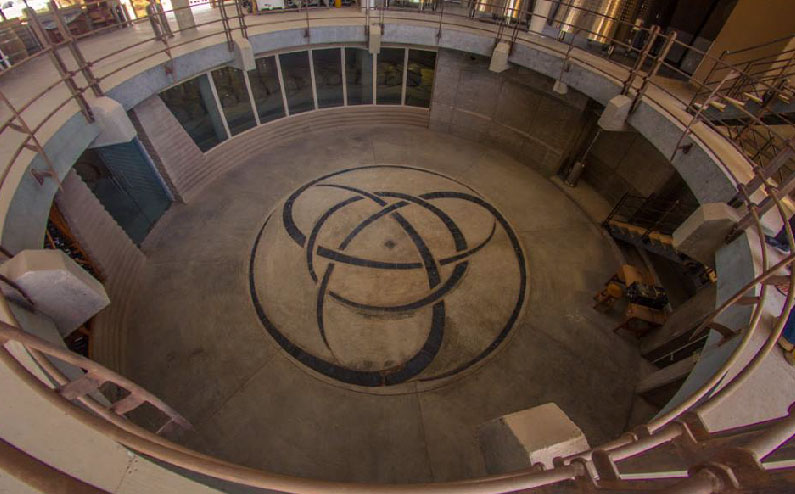
Photo Courtesy of AlXimia Under a sky that only a handful of locations in the world can offer (Ensenada’s observatory is the second most important in Latin America), AlXimia’s large, intricate dome-like structure, is a vision out of a sci-fi movie. As we drove by, I was transfixed. I could not help but intermittently think about a mothership and “The Jetsons”.
“Mad scientists,” joked Pasión Biba’s Abel Bibayoff, as we parked right next to the futuristic dome. I can hardly contain my excitement- “We saw this from the road last night!”


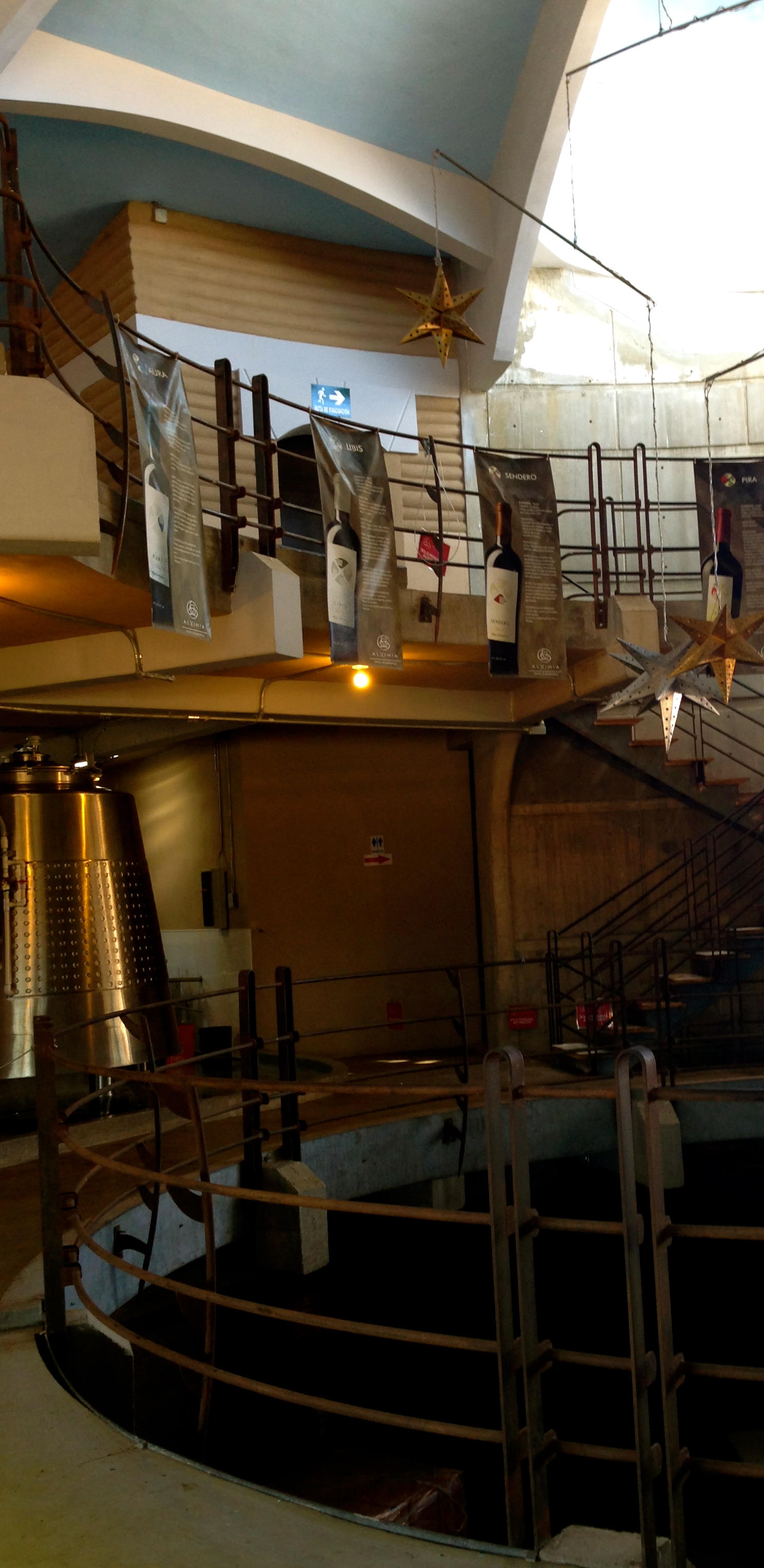
Photo courtesy of AlXimia Dubbed by the locals “The flying saucer that landed in Valle of Guadalupe” or “The Cathedral of Wine”, the building is an architectural exercise in ingenuity and efficiency. Thought out to showcase water and energy conservation while highlighting the wine-making process, it is clear from our vantage point within this unique circular building, that we have found ourselves in the midst of something quite extraordinary.
At the fulcrum point of art and science, AlXimia really lives up to its name. Backed up by a a group that under one cellar (and immediate family) gathers astronomers, educators, winemakers and even Ivy League mathematicians, it is no wonder why this A-team produces award-winning wine. In fact, Spain’s most reputable and comprehensive wine guide, Guía Peñín, has recently given AlXimia’s Aqua 93 points, the highest score for a Mexican wine, positioning it as “excellent” within the 90-94 point range.

I was particularly fascinated by the concept “Elemental Wine” or “Vino Elemental” explained by Alximia’s winemaker Álvaro Álvarez- a nod to the four elements in nature: air, water, earth and fire. According to the philosophy of the winery, the combination of these four speaks to balance, sustainability, and, maybe more importantly, to the little piece of Valle de Guadalupe that is included in every bottle of AlXimia. Beyond the beauty of the concept, pragmatism- consumers can guide themselves with the elements represented in each wine for pairing purposes. For example, water and fish; air and poultry, and so on and so forth. Brilliant.

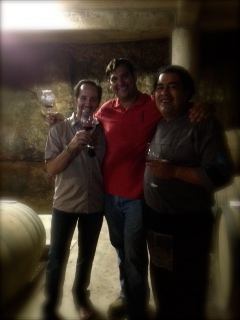
Starstruck by a select group of food and wine intellectuals. From left to rightL ÁlXimia’s Álvaro Álvarez, Pasión Biba’s Abel Bibayoff and Lozhka Bistrot’s Chef José Bossuet While AlXimia’s operation is smart, and innovative, it is also firmly grounded in family, work ethic, and a profound respect for nature. I find it so poetic that the family’s patriarch is an astronomer… these Mexican entrepreneurs are undeniably, stars.
Where to buy: Visit the winery´s online store.
How to get there: Click here to find a map.
Do not miss: La Terrasse San Román by chef Martín San Román, located in the winery’s terrace.
Prior articles in the series:
<¡´Biba´México! The Zeal Behind Mexico´s Pasión Biba
< World Class: Mexican Wine and the Hands who Make it (Introduction to a Series)


 El Chef Aldo Saavedra ha cocinado para huéspedes de establecimientos como el conocido Hotel Condesa D.F. y ha contribuído con sus recetas en proyectos con marcas de la talla de Larousse y Danone. En Nuestra Mesa, y en su página